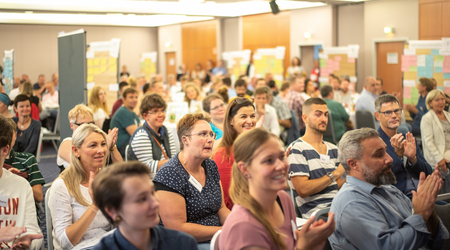
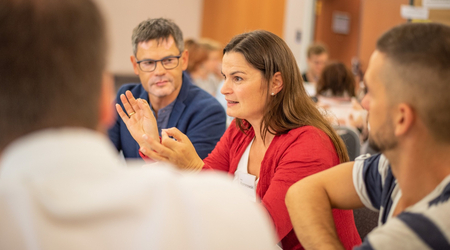
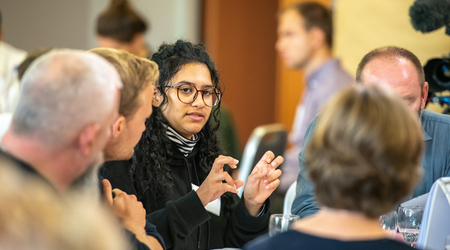
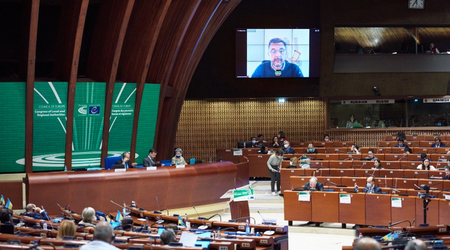
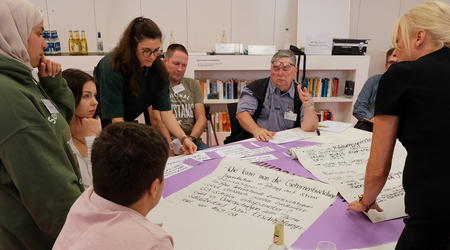
The special thing about citizens' assemblies is that the participants are randomly selected from the population. Their task is to jointly propose solutions to political problems.
Read more
From preparation to implementation of results, a citizens' council goes through various stages. We explain the process.
Citizens’ assemblies have a wide range of positive effects on democracy and politics. Here is an overview of the arguments in favour of sortition-based democracy.
What makes a good citizens' assembly? The most important quality criteria at a glance.
From the UN Democracy Fund to the OECD, the Council of Europe, the European Commission and political foundations, renowned institutions recommend the use of citizens' assemblies.
Examples show how citizens’ assemblies influence political decisions, foster consensus, resolve conflicts, boost satisfaction with democracy and empower people.
How does random selection work? How big should a citizens' assembly be and what are the costs? How are experts selected and who moderates mini-publics? We answer these and other questions here.