

Shaping digital democracy together
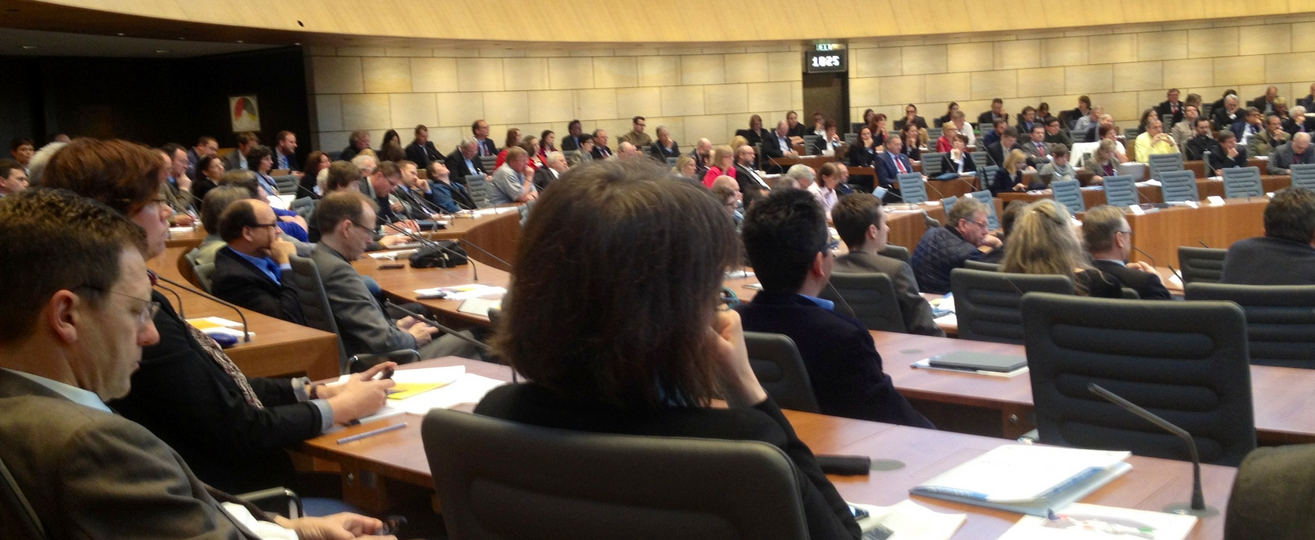
Digitalisation is changing the way we live, work and communicate with one another. Digital technologies are increasingly permeating all areas of life – from public administration and healthcare to information, communication and political participation. At a time when digital technologies and AI are fundamentally transforming our society, and in view of the far-reaching changes that digital technologies and AI bring to all areas of life, it is essential to discuss these issues from different perspectives.
The conference therefore focuses on the question: How can we shape the digital transformation in a democratic and public-interest-oriented manner? What role can open science play in this? The Cluster’s 6th conference brings together stakeholders from academia and civil society to examine the ethical, legal and social implications of the digital transformation and the growing importance of AI across three thematic areas:
- Access and participation: How can digital tools and generative AI support democratic participation – for example in citizens’ assemblies and online dialogues – to promote democratic participation whilst preventing exclusion? How do we ensure barrier-free access to technological development and social participation?
- Transparency and trust: What requirements must be placed on AI to guarantee reliability and traceability? How can the scientific community communicate with society in a way that is understandable and fosters dialogue, for example in the climate debate?
- Responsibility and design: How can we systematically take ethical issues into account in the context of AI development? How can we successfully integrate diverse perspectives into technological development?
The conference presents findings from the projects of the 3rd sub-cluster “Perspectives of Open Science in a Digitalised Democracy” and invites participants to engage in joint discussion and reflection. Among other things, it will demonstrate and discuss how AI can be developed in a responsible, inclusive and human-centred manner, and what it means when research opens up, allowing for uncertainty and testing new forms of co-creative collaboration.
Bringing research and society into dialogue on these topics and exchanging experiences enables us to shape digitalisation in a human-centred way. However, this also makes the boundaries between science and society more permeable and necessitates their renegotiation. This is both an opportunity and a challenge. For openness and co-creation mean sharing control, tolerating diverse perspectives, turning them to productive use, and rethinking research processes.
The conference offers space for exchange and participation: at the Science Café, participants can learn about and try out the projects and the tools and recommendations for action developed within them. Following this, the aim is to discuss with practitioners how the transfer of the results developed in the projects can be successfully achieved.
On the second day, they intend to explore two topics in greater depth: In an interactive discussion, you will jointly explore perspectives on responsible AI development. A panel discussion will examine how inclusive participation and social engagement actually are, and provide impetus for barrier-free technology development and participatory formats.
Finally, the aim is to take stock, look ahead and reflect on the concept of Integrated Research from various perspectives.