

A millionaires’ tax instead of high property taxes?
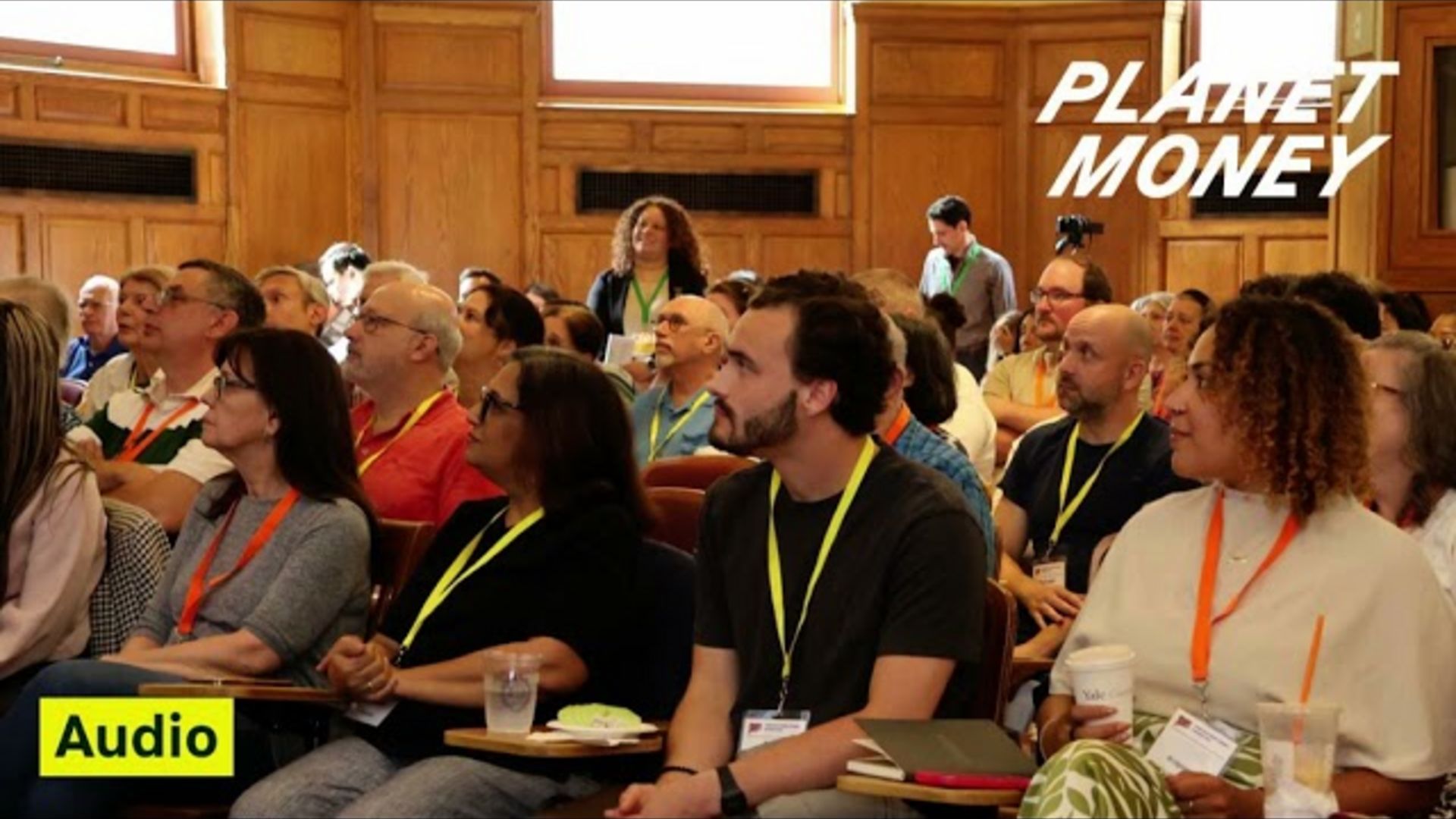
Introduce highway tolls, raise taxes on millionaires, consolidate school administrations: A Citizens’ Assembly in Connecticut has brought together a package of reforms addressing issues that have been politically contentious for years. On 26 October 2026, the Connecticut Citizens’ Assembly on Property Taxes presented ten recommendations aimed at reducing property tax burdens and improving the funding of public services.
All ten proposals received at least a two-thirds majority. The Citizens’ Assembly had taken on an unusual task: people with different incomes, political beliefs and backgrounds were asked to find solutions for a tax system that politicians have struggled to reform for decades.
“Our recommendations are evidence-based and designed to succeed where all previous attempts have failed,” the members write in their final report.
Higher revenues, lower property taxes
The central question was how Connecticut could finance its municipalities without placing an ever-increasing burden on property owners. Cities and towns rely heavily on property taxes, resulting in significant disparities between wealthy and financially disadvantaged communities.
The Citizens’ Assembly therefore recommends reintroducing highway tolls. Additional revenue would benefit municipalities and help reduce property and motor vehicle taxes.
Another recommendation calls for an additional income tax of at least one percentage point on annual incomes exceeding one million US dollars. This revenue would also help ease the tax burden on residents.
Sharing responsibility for schools
Some of the most far-reaching proposals concern education. The state should assume the full cost of special education services. The Citizens’ Assembly also recommends incentives for greater cooperation between school administrations.
Other proposals include sharing municipal services, reviewing property tax exemptions for non-profit organisations and limiting costly requirements imposed on municipalities by the state.
The recommendations aim not only to reduce property tax burdens but also to narrow the financial disparities between wealthy and less affluent municipalities.
More than 220,000 invitations sent
The process began on 11 July 2026. It was jointly organised by State Comptroller Sean Scanlon, the Connecticut Conference of Municipalities and researchers from Yale University and the University of Connecticut.
Participants were selected through a multi-stage process. A total of 222,060 invitations were sent out. From 1,507 people who expressed their willingness to participate following two surveys, a group was randomly selected. Selection criteria included homeownership, children in the household, region of residence, income, gender and political orientation.
The original selection was intended to reflect the population as closely as possible. However, withdrawals and cancellations changed the composition: among the final 103 members, women and supporters of the Democratic Party were overrepresented compared with the population as a whole. The final report explicitly documents these differences.
“We give them the keys”
One distinctive feature was the Citizens’ Assembly’s extensive self-governance. Political scientist Hélène Landemore of Yale University played a leading role in developing the concept. Before the process began, she explained: “We give them the keys on day one.”
At their very first meeting, members voted by 89 votes to eight, with one abstention, to take responsibility for their internal procedures. A rotating seven-member committee handled organisational matters. Ten members could jointly request a vote by the entire Assembly.
The citizens also decided that recommendations would require a two-thirds majority. The texts were drafted and revised by the members themselves rather than being prescribed by researchers.
Citizens determine the process
Citizens’ Assembly member Christine Baptiste from Bridgeport described the challenges of self-governance to Yale University. After the first weekend, she feared that the absence of clear procedures could lead to chaos.
Dawris Gomez, also from Bridgeport, drew a different lesson from the experience: “Because the process is citizen-led, we created the rules ourselves that allow us to reach consensus.”
Landemore observed that members worked together despite their different views. “They all agree that there is a problem with the property tax system,” she explained. “They don't have the same idea of what the solutions are, but they're willing to work very hard together.”
Thousands more residents involved
The Citizens’ Assembly met six times between July and September, partly in person and partly online. Members heard from experts in academia, public administration and politics, including municipal finance officials and representatives of both major political parties.
The discussions were not limited to the randomly selected members. Through two digital participation platforms, more than 4,700 residents contributed over 700 ideas and more than 80,000 ratings.
The results were compiled and made available to the Citizens’ Assembly, partly with the help of artificial intelligence. Some members expressed concerns about the use of AI.
“Solutions from ordinary people”
At the presentation of the final report on 26 October, Citizens’ Assembly member Dawris Gomez emphasised that the proposals were “solutions developed by ordinary citizens who themselves bear the consequences of our property tax burden”. An overwhelming majority of members supported them.
However, the deliberations did not resolve every political disagreement. Highway tolls, higher taxes on top incomes and the consolidation of school administrations remain controversial in Connecticut.
Speaking to CT Insider, Christine Baptiste acknowledged concerns that school reform could undermine local autonomy. At the same time, she questioned whether the existing system of 165 school districts was really working.
Not every proposal will be implemented
Citizens’ Assembly member Elliot Weller was cautious about the prospects for implementation: “I'm not sure any of us realistically believe that all these proposals will get through.” He would already consider it a success if several recommendations were adopted.
State Comptroller Sean Scanlon had supported the process from the outset. At its launch, he noted that Connecticut had not fundamentally reformed its tax system for decades. The Citizens’ Assembly was intended to help generate the political courage needed for change.
Joe DeLong, executive director of the Connecticut Conference of Municipalities, also emphasised the importance of broad participation. The aim was to remove barriers so that participation would not be limited to people with plenty of time or money.
Now it is up to politicians
Scanlon has pledged to bring the recommendations before a dedicated legislative hearing. However, the state legislature is under no obligation to implement them.
Following publication of the report, Governor Ned Lamont welcomed citizens’ willingness to consider improvements to the tax system. At the same time, his spokesperson pointed to the competing interests and difficulties that any reform would have to address.
This marks the beginning of a crucial phase for the Citizens’ Assembly. Its members have not only developed ten concrete reform proposals. They have also demonstrated that people with different political beliefs can reach common positions on a highly contentious issue.
Political impact remains uncertain
Whether the recommendations become law now depends on elected legislators. The Citizens’ Assembly can make proposals but cannot take political decisions itself.
Its members clearly express their expectations in the final report: they hope to see evidence of political action by the beginning of the next fiscal year.
The Connecticut process could therefore become a test case for the political impact of Citizens’ Assemblies. What matters is not only whether randomly selected citizens can develop shared recommendations, but also how elected representatives respond to them.